
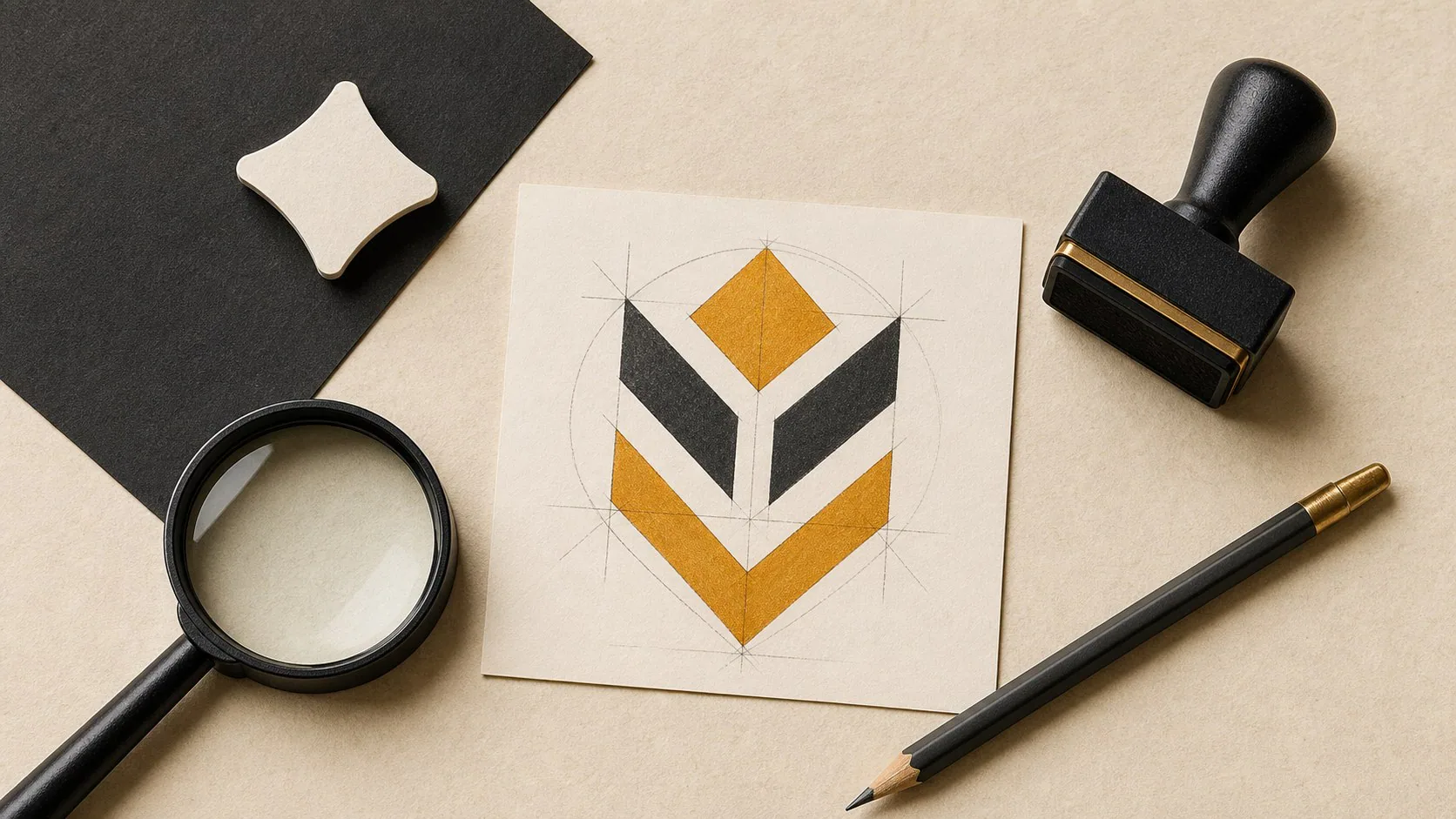
A business may apply to register an AI-assisted logo as a South African trade mark if the mark can distinguish its goods or services and does not conflict with earlier rights. Registration is not automatic, and it does not settle every copyright question. Keep prompt and edit records, commission human refinement, search the CIPC register and get trade mark advice before a high-cost launch.
An AI image tool can produce a logo in a minute. The business still needs to clear, refine and own the result it puts on invoices, vehicles and signage.
Trade mark registration and copyright answer different questions.
A trade mark protects a sign that identifies the source of goods or services. Copyright can protect original artistic work. A CIPC registration for the mark does not prove that the image never copied protected material or that the business owns every copyright interest.
This article gives a business checklist, not legal advice for a disputed mark.
CIPC looks for a mark that can distinguish the business
CIPC administers South Africa’s trade mark register.
Its guidance says a mark may register when it distinguishes one trader’s goods or services from another’s and avoids several grounds for refusal. A mark should not consist only of descriptive signs, become customary in the trade, misuse protected emblems, deceive the public or conflict with earlier rights.
AI does not remove those tests.
A generated icon of a generic house for an estate agency may struggle because many businesses use similar imagery. A distinctive name, symbol and visual system creates a stronger candidate.
The application also needs the correct class or classes. South Africa uses 45 Nice Classification classes. A business that makes a product and sells it may need more than one application.
Search before paying for a rollout
CIPC offers a cursory electronic search and an optional special preliminary search.
A search needs to cover more than an exact spelling. Look for:
- similar names;
- phonetic matches;
- close symbols;
- related goods or services;
- company names and domains;
- common-law use outside the register.
A clear search cannot guarantee acceptance. It can expose an obvious conflict before the business prints stock.
Do the search before buying signage, uniforms, packaging or a large domain portfolio.
AI output can resemble existing work
Image generators learn patterns from large collections of images. A prompt can return a familiar shape, mascot or composition without showing the source.
The business should run:
- reverse image searches;
- CIPC trade mark searches;
- competitor reviews in the same market;
- icon-library checks;
- stock-asset checks.
Do not ask the AI tool to copy a named brand, designer or protected character. A prompt such as “make it look like Nike” creates a risk that no later colour change will fix.
Keep the prompts, generated options and editing history. Those records help show how the final mark developed.
South African copyright law leaves room for human arrangements
South Africa’s Copyright Act defines the author of a computer-generated artistic work as the person who undertook the arrangements necessary for its creation.
That wording predates current generative image systems. South African courts have examined computer-generated work in other contexts, but no simple public rule turns a short prompt into secure ownership of every AI image.
The safest commercial route adds human authorship and contractual clarity.
A designer should:
- treat the AI output as research or rough material;
- redraw the mark;
- make deliberate choices about form, spacing and proportion;
- create original vector artwork;
- document the design process;
- assign the agreed rights to the client in writing.
The contract with the AI service matters too. Check its current terms for commercial use, account level, indemnities and output restrictions.
Trade mark registration does not cure a copied image
CIPC examines the trade mark application under trade mark law. Earlier rights holders can oppose or challenge a mark.
A registered logo can still face a copyright claim if the artwork copied a protected work. A business can also hold copyright in artwork that performs poorly as a trade mark because it is descriptive or confusingly close to an earlier mark.
Treat these as separate checks:
| Check | Question |
|---|---|
| Trade mark | Can this sign identify our goods or services without conflicting with earlier rights? |
| Copyright | Do we have a defensible right to use and reproduce the artwork? |
| Contract | Did the designer assign the required rights? |
| Platform terms | Does the AI service permit the intended commercial use? |
| Brand fit | Can the mark work across print, screens, signage and one colour? |
Refine the mark for real use
AI logo files often fail outside the image preview.
The business needs:
- vector files such as SVG, EPS or editable PDF;
- a one-colour version;
- a small-size test;
- light and dark background versions;
- clear-space rules;
- typography licences;
- colour values for print and screens;
- an icon that does not depend on tiny detail.
Test the logo at favicon size and on a black-and-white invoice. Embroidery and vehicle graphics expose weak shapes fast.
Avoid using generated text inside the image. Build the name with licensed type and correct spacing.
Decide who owns the working files
The agreement should state:
- who owns the final artwork;
- which rights transfer after payment;
- whether the designer may show the work;
- which fonts or stock assets use separate licences;
- whether AI tools contributed;
- which source files the client receives.
A PNG is an output file. It does not give the business the editable geometry needed for future work.
A practical clearance sequence
Use this order before launch:
- Choose a distinctive business name and concept.
- Search CIPC, the web, domains and competitors.
- Generate or sketch multiple directions.
- Remove directions that resemble known marks.
- Commission human redraw and refinement.
- Confirm licences and platform terms.
- Test the mark in real applications.
- Get a written rights assignment.
- Ask a trade mark practitioner about the classes and search.
- File before a costly public rollout where the risk warrants it.
CIPC states that a registered trade mark can remain protected through ten-year renewals. That long life deserves more care than a one-minute generation.
IDJOY can turn rough AI ideas into an original brand system with usable files and a documented handover. Start a branding enquiry before the business commits the mark to production.