
In your first 30 days, separate business money, list fixed and variable costs, record every invoice and due date, set payment terms before work begins, reserve money for tax where relevant and review the next four weeks of expected cash in and cash out. Revenue is not the same as cash available today.
Sales can make a business look healthy while the bank balance tells a different story. A client may accept a quote today, pay next month and ask you to buy materials this week.
Build a cash-flow habit before the pressure arrives.
Week 1: Separate the money
Use a dedicated business account or a clearly separated system for business income and expenses. Keep every receipt, record every payment and avoid treating the first client payment as personal spending money.
This gives you a reliable starting point for decisions. If business and personal transactions are mixed together, you cannot see which work is paying for itself.
Week 2: List what leaves the account
Write down fixed costs such as data, software, rent, insurance and subscriptions. Add variable costs such as travel, materials, subcontractors and delivery fees. Include tax obligations that apply to your business, but do not estimate tax treatment from a blog post. Use current SARS guidance or a qualified adviser where needed.
Week 3: Track what clients owe and when
For every invoice, record the amount, invoice date, due date, client contact and follow-up date. A sale is not available cash until it is paid.
Use deposits or milestones where upfront work creates real risk. Make terms clear before the job begins.
Week 4: Look ahead four weeks
List expected cash in by realistic payment date, then subtract the cash out you cannot avoid. Treat uncertain work as uncertain. This short forecast lets you spot a gap before it becomes an emergency.
The first mistake to avoid
Do not confuse revenue with cash flow. An invoice for R10,000 does not pay rent, suppliers or tax until the money arrives.
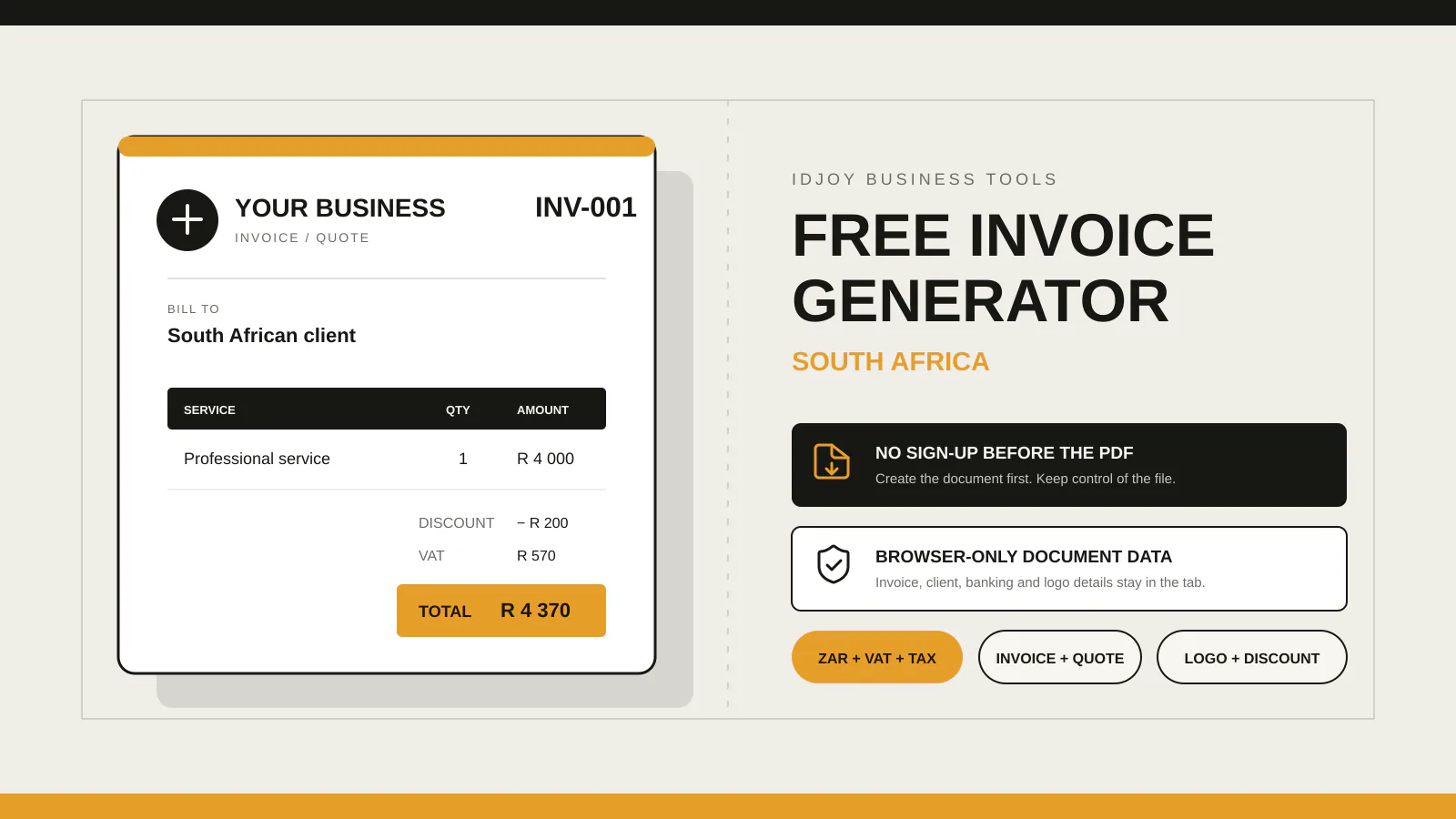
IDJoy’s free invoice generator helps you issue the document that starts the payment process. Create a browser-only PDF with line items, terms, banking details and ZAR totals without opening an account. The app is still in production for businesses that later need saved documents, reusable clients and service records.