
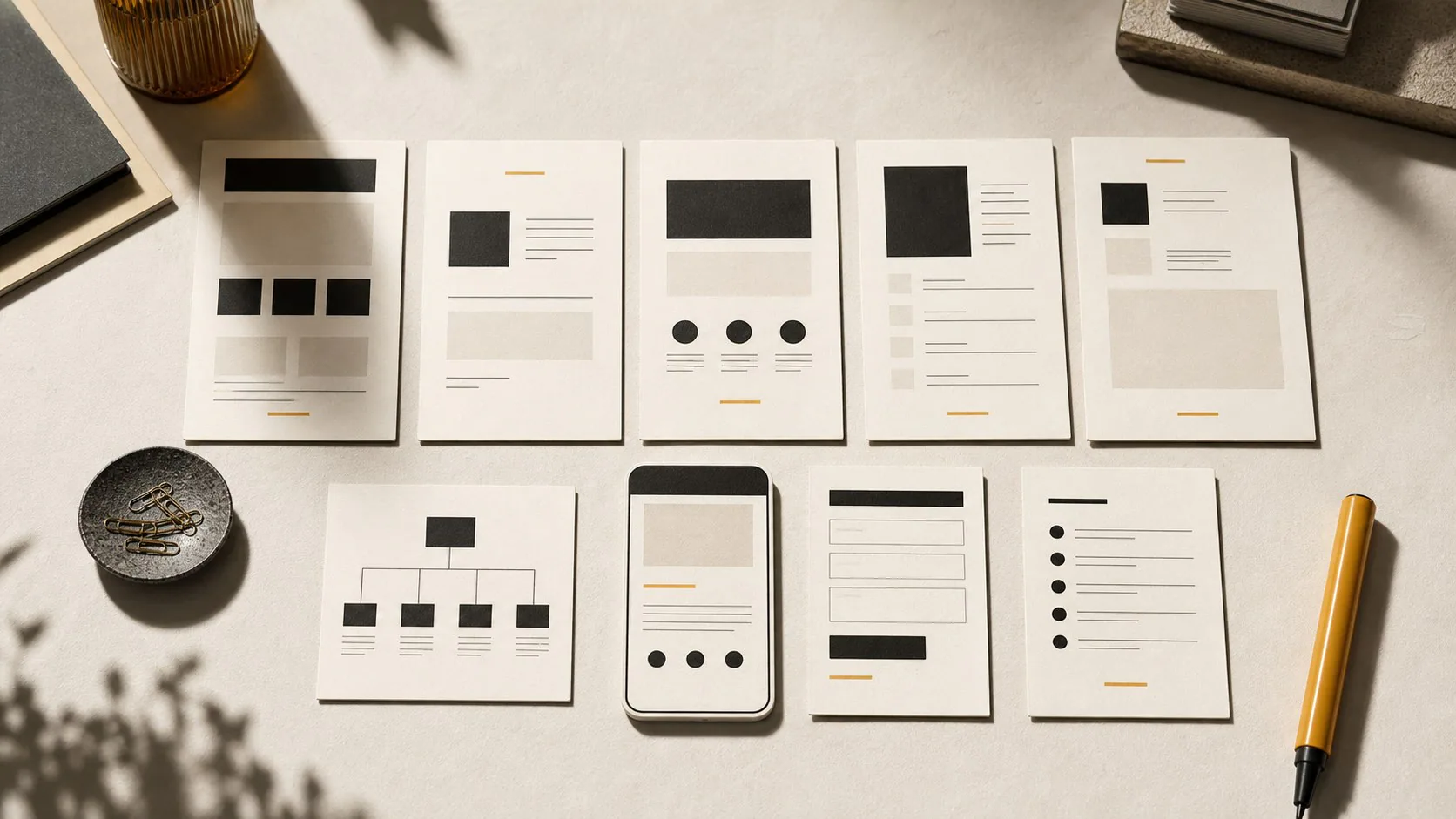
Small businesses commonly use service websites, online stores, portfolios, booking sites and publishing websites. Many combine more than one type. Choose the structure around what customers need to understand or do, such as compare services, buy a product, view work, book a visit or read updates.
A business website should make the next customer decision clear. A service company needs visitors to understand its offer and enquire. A shop needs product details and checkout. A portfolio needs to show work in context.
Those needs lead to different website structures. A business can combine types, but it should plan each feature around a real customer task.
Common types of small-business websites
| Website type | Useful when customers need to | Typical pages or features |
|---|---|---|
| Service or company website | Understand services, trust the provider and enquire | Home, services, about, work or proof, contact |
| Ecommerce website | Compare products and place an order | Product pages, categories, cart, checkout, delivery and returns details |
| Portfolio website | Review examples before hiring | Selected projects, process, capabilities and enquiry route |
| Booking website | Choose a time or appointment | Service options, availability, booking and confirmation |
| Publishing website | Read regular articles, news or resources | Categories, article pages, search and author information |
| Campaign landing page | Complete one action from a specific campaign | One offer, proof, key details and a focused form or purchase action |
| Directory or membership website | Find listings or access restricted material | Searchable records, member accounts, permissions and support |
These labels describe the main job of a site. A salon might combine service information with booking. A photographer might combine a portfolio with a small print shop. A consultancy might publish articles alongside service pages.
Examples of the right website structure
A local service company
A plumbing company may need separate pages for drain repairs, geyser installations and emergency callouts. Each page can explain the work, service area, response expectations and contact option. A single landing page can work for one paid campaign, while a broader site gives customers room to compare several services.
A product business
A retailer needs product pages with clear details, stock or delivery information, payment and a usable checkout. An online store becomes more involved when products have variants, subscriptions, custom delivery rules or an inventory system.
A creative studio
A designer or photographer needs selected work that explains the brief and the result. A gallery alone may show images but leave visitors unsure what the creator contributed or how to enquire.
These are planning examples, not reported IDJoy client outcomes. The structure should follow the work the business actually sells.
Website, webpage and website address: what is the difference?
A website is a group of related pages served under a domain. A webpage is one page within that website. A website address, also called a URL, points to a domain or a particular page.
For example, https://example.com/services/ is an illustrative page address. example.com is the domain; /services/ identifies a path on that site. IANA reserves example domains for documentation and examples, so use your own domain for a live business website.
How to choose a website type
Write down the customer action before you choose features:
- What does the visitor need to understand? List the service, product or expertise they came to evaluate.
- What proof helps them decide? This might be project examples, product specifications, reviews or a clear process.
- What should happen next? Choose one main action, such as enquire, call, book or buy.
- Who will keep the information current? Product prices, opening hours, service details and appointment availability can have different owners.
- Which features support that task? Add a catalogue, booking system or member area only when the customer journey needs it.
Use a landing page when one offer needs one focused action. Use a full service site when customers need to explore several offers or build confidence across multiple pages. Our guide to what a five-page website should include helps turn that structure into a practical page plan.
Match the website type to the project scope
The type of site affects design, content, development, testing and maintenance. An online store needs a working checkout; a service site needs clear service paths and tested enquiries; a booking site needs accurate availability and confirmations.
IDJoy’s website design and development service plans and builds business sites. For a catalogue and checkout, review our ecommerce website design service. Start with the customer task, then scope the pages and features the business can maintain.