
Separate business and personal money from the start by using a dedicated account or a consistently separate record, paying business costs from it, recording owner withdrawals clearly and retaining invoices and receipts. This makes cash flow, pricing and tax records easier to understand, although the right legal and tax setup depends on your business.
Mixing personal and business money feels harmless when the business is small. Then a client pays into a personal account, a subscription renews, a grocery purchase sits beside a supplier payment and nobody can tell what the business earned or spent.
The fix is less glamorous than a new logo. It is also more useful.
Create a clear home for business money
Use a dedicated business account where your operating structure and bank allow it. If you are still setting up, use a separate method that gives you the same clarity and move to the appropriate account as soon as practical.
Clients should receive payment instructions that match the business identity you use on quotes and invoices. If a legal name, trading name and account holder differ, explain the relationship clearly enough for the client to verify it.
Record owner money separately
Owners sometimes put personal money into the business or take money out. Record the date, amount and reason. Do not leave it looking like customer revenue or a normal supplier expense.
This makes a later conversation with your accountant far less confusing.
Keep the evidence with the transaction
Save supplier invoices, receipts, customer invoices, payment confirmations and agreements. Use a naming pattern that includes date, supplier or client and document number.
Good records help you check whether a project was profitable, find a document when a client queries it and meet your record-keeping responsibilities. Tax and legal obligations vary, so use current SARS guidance and professional advice for your specific position.
Make invoicing part of the boundary
Send invoices from the business identity you want clients to recognise. Use a unique invoice number, clear line items and a payment reference. That creates a usable trail from work agreed to money received.
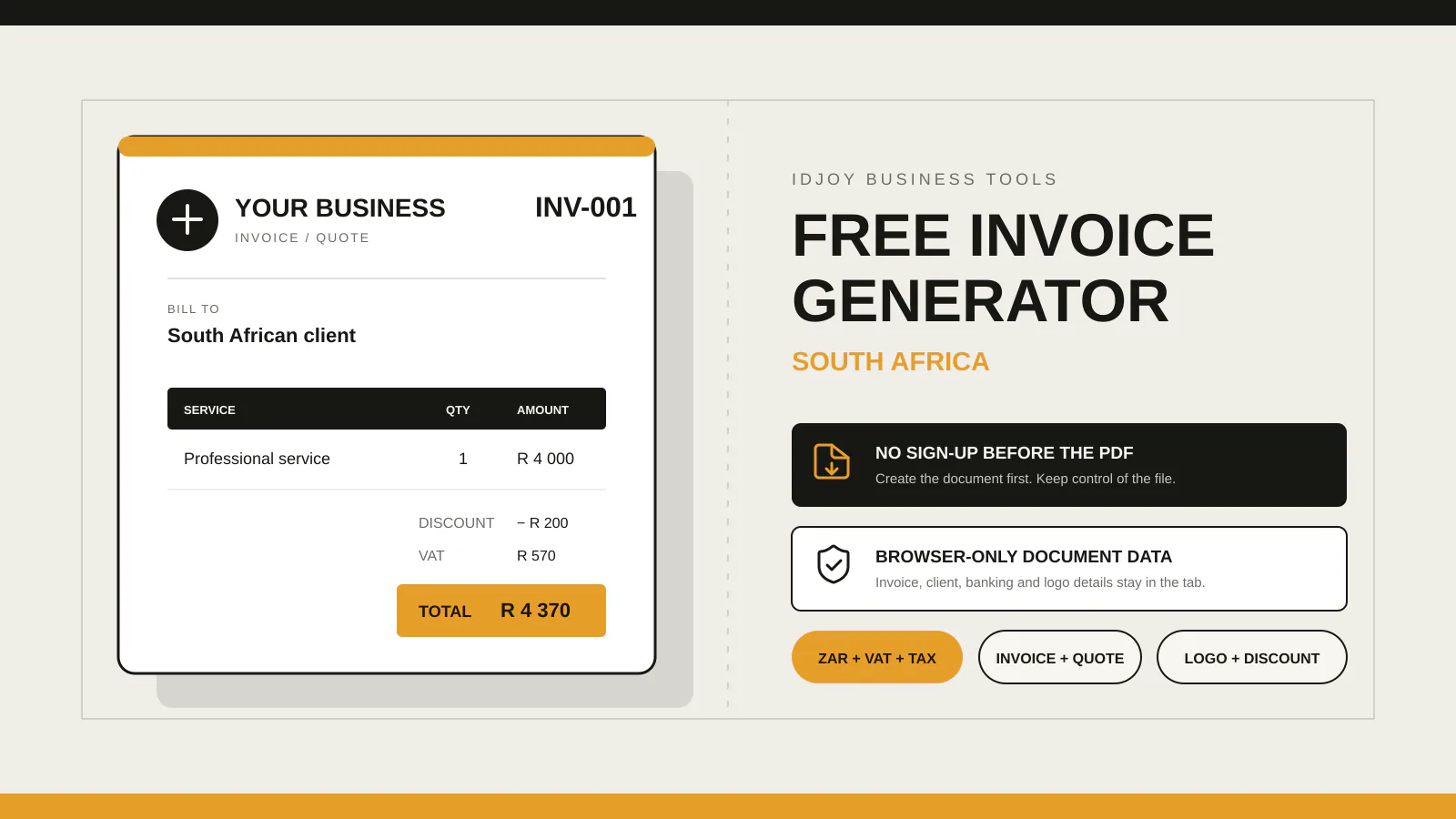
IDJoy’s free generator is useful while the business is getting established: create a professional PDF invoice or quote in the browser without creating an account or submitting client data to IDJoy. The app in production is intended to add saved documents, reusable clients and stored service details when that fuller workflow becomes useful.